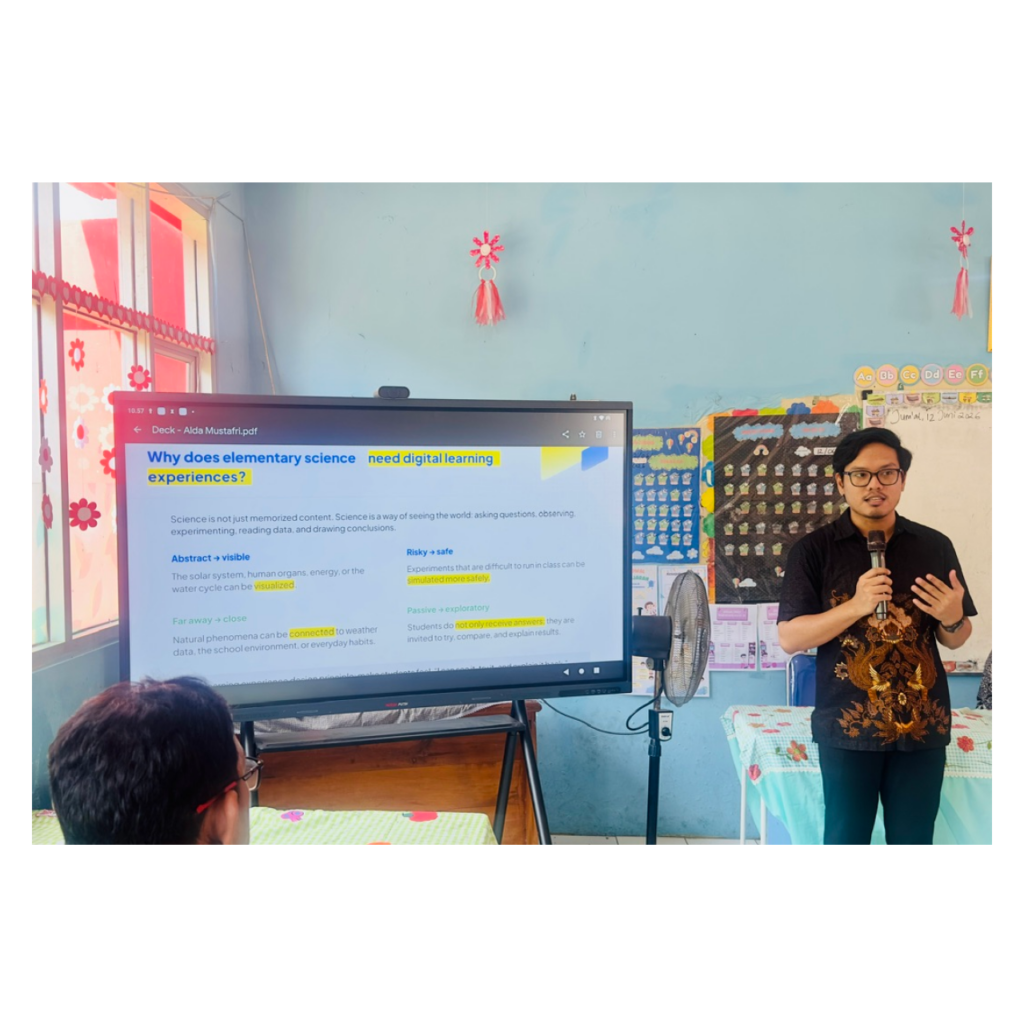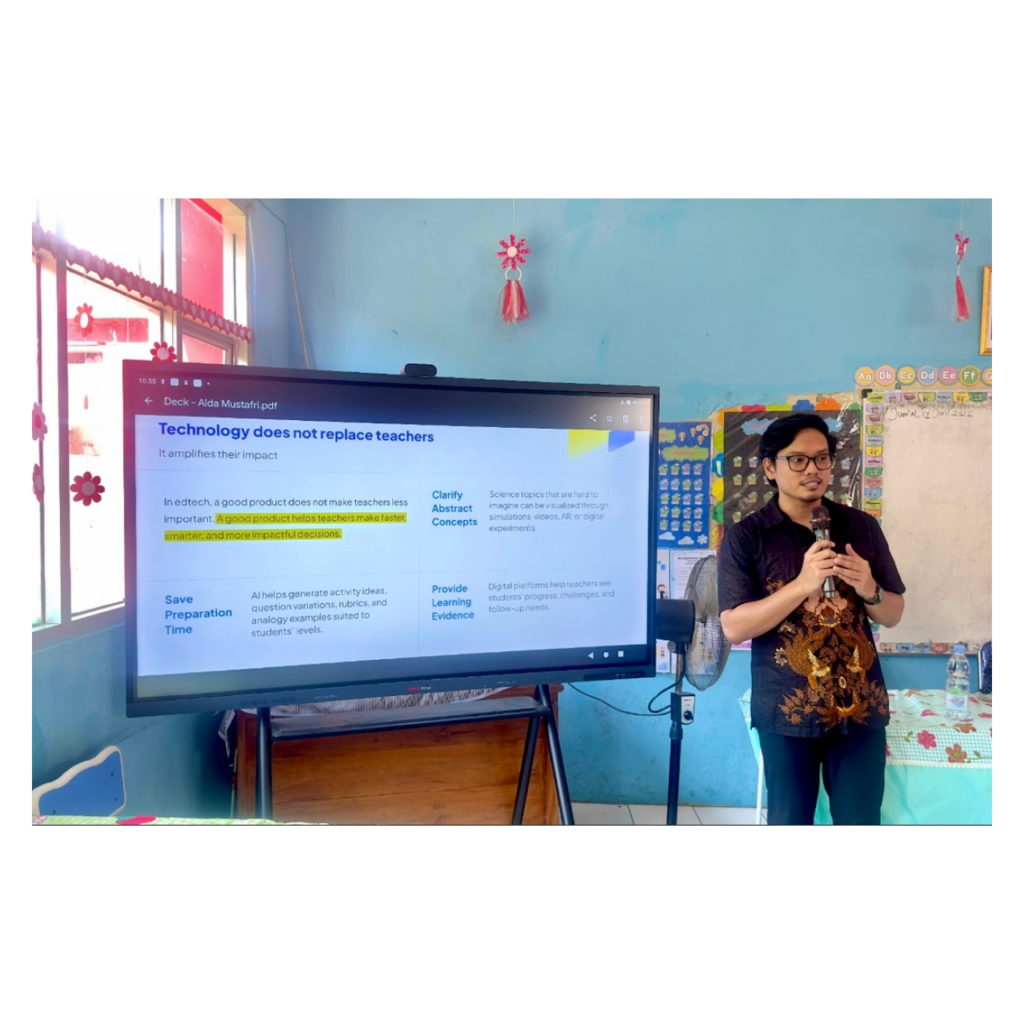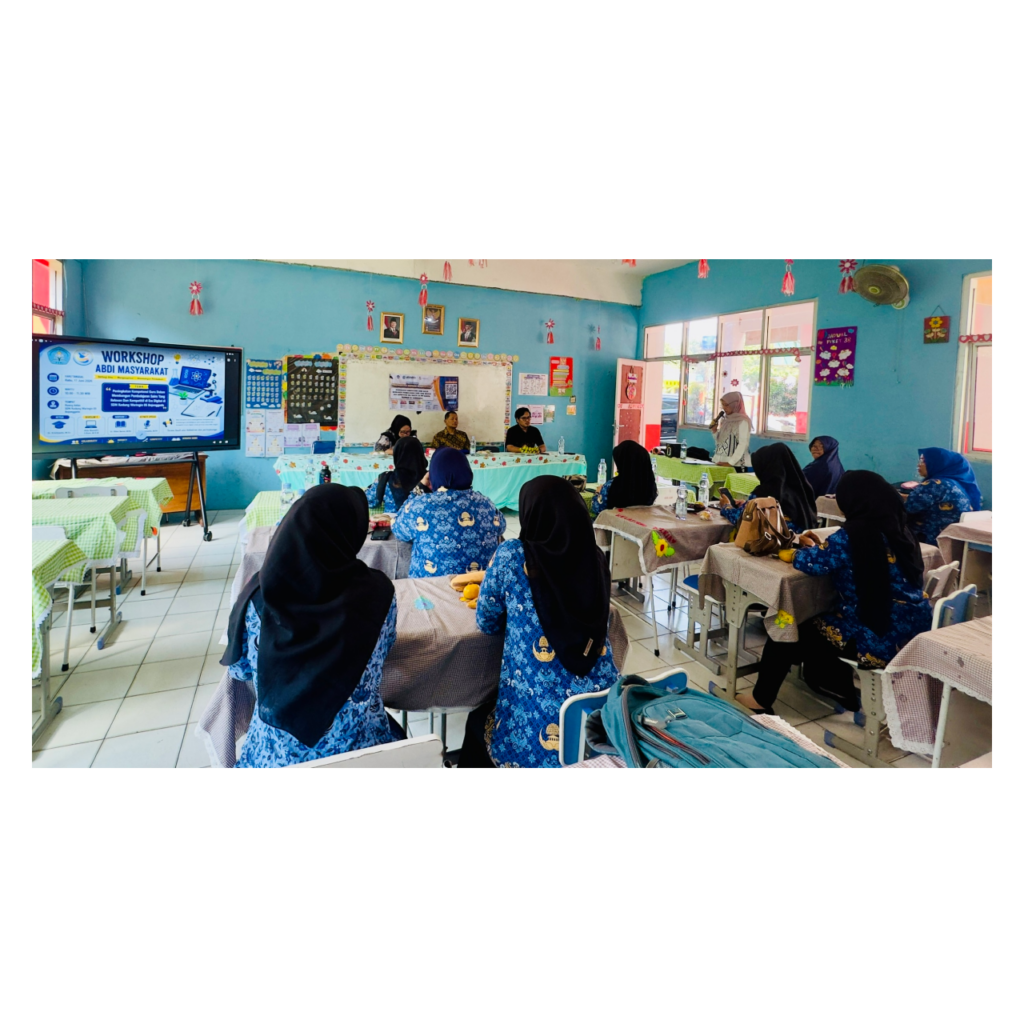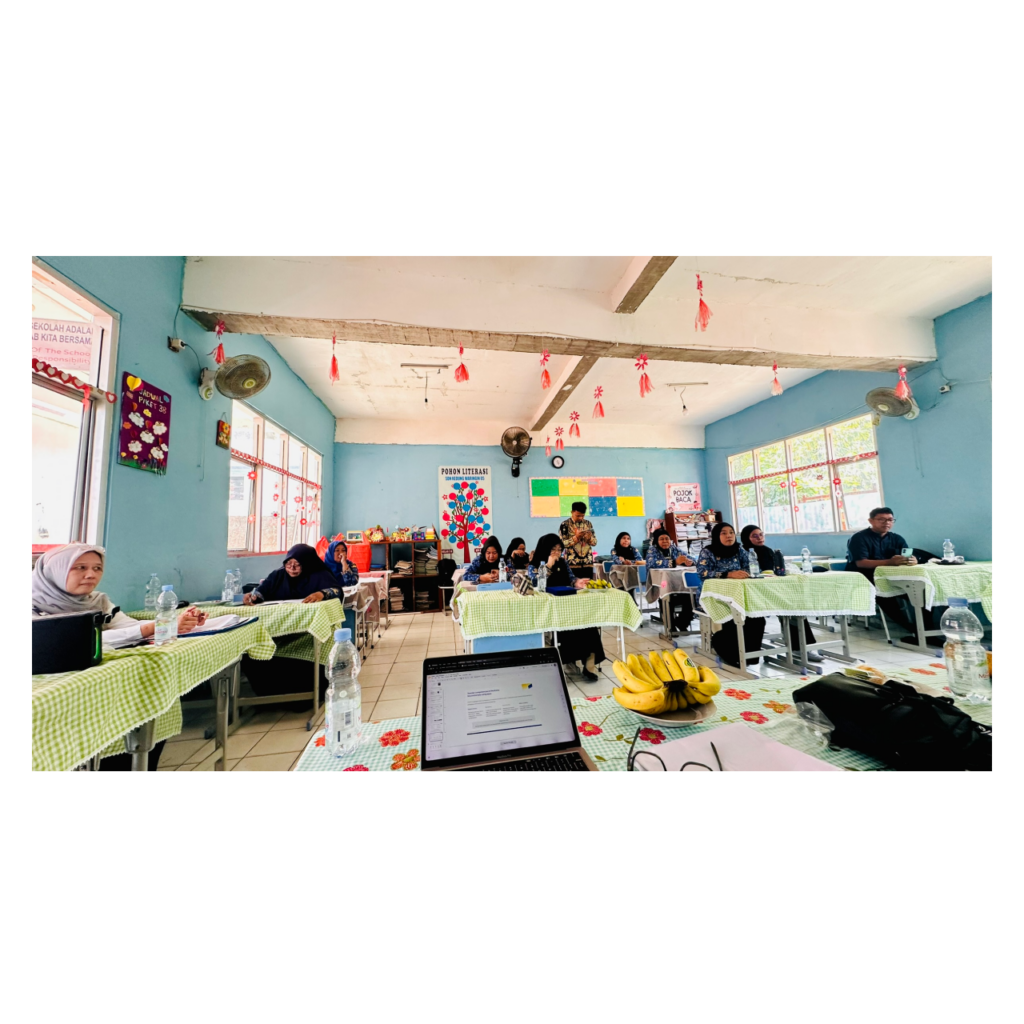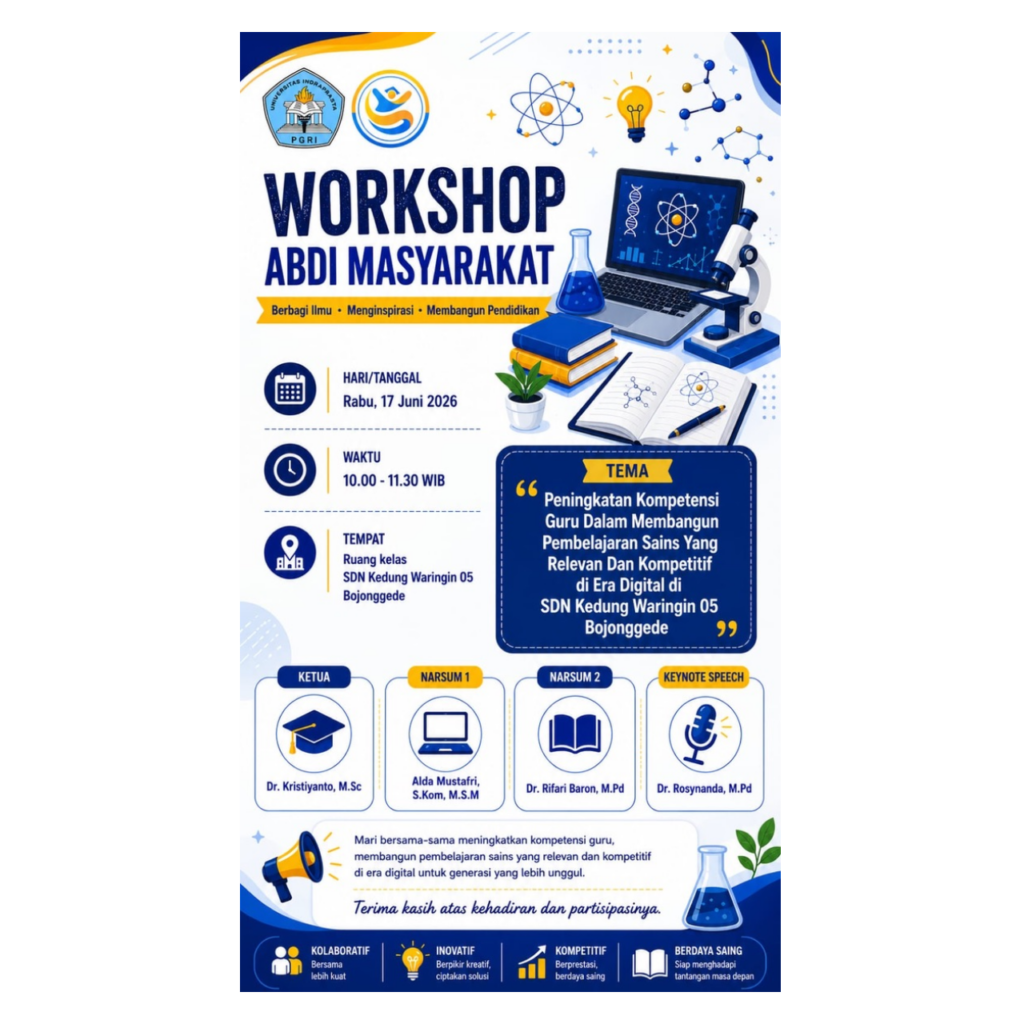
On Wednesday, June 17, 2026, I had the valuable opportunity to participate as a speaker in a community service workshop held at SDN Kedung Waringin 05, Bojonggede. The workshop took place from 10:00 a.m. to 11:30 a.m. Western Indonesian Time and focused on the theme:
“Improving Teachers’ Competencies in Developing Relevant and Competitive Science Learning in the Digital Era.”
This activity was organized as part of a community service initiative aimed at supporting teachers in improving their professional competencies, particularly in science education. It also provided a meaningful platform for educators, academics, and education practitioners to exchange ideas, share experiences, and discuss how teaching practices can remain relevant in a rapidly changing digital environment.
The workshop carried the spirit of sharing knowledge, inspiring others, and contributing to the development of education. These values were reflected throughout the event, from the presentations and discussions to the enthusiasm shown by the participants.
Responding to Changes in the Digital Era
Education is continuously changing. Today’s students grow up in an environment where digital devices, online information, interactive media, and artificial intelligence are becoming increasingly familiar. As a result, teachers are expected not only to understand the subject matter they teach but also to develop learning experiences that are engaging, contextual, and appropriate for the characteristics of modern learners.
Science education has an especially important role in this transformation. Science is not simply a collection of facts, formulas, and theories that students must memorize. It is a way of thinking, asking questions, conducting investigations, analyzing evidence, and solving problems.
In the digital era, science learning should encourage students to become active participants in the learning process. They need opportunities to observe, experiment, discuss, create, and reflect. Digital technology can support these activities when it is used thoughtfully and purposefully.
However, the use of technology should never become the final objective of education. Technology is a tool that can help teachers make learning more accessible, interactive, and meaningful. The main objective remains the same: helping students develop knowledge, skills, curiosity, creativity, and strong character.
The Importance of Teacher Competency
Teachers remain one of the most important elements in the learning process. No matter how advanced educational technology becomes, the teacher’s role cannot be replaced entirely. Teachers provide direction, motivation, feedback, emotional support, and meaningful human interaction.
For this reason, improving teacher competency is essential. Teachers need to continuously strengthen their knowledge, teaching skills, digital literacy, communication abilities, and understanding of student needs.
In science learning, teachers are encouraged to develop several important competencies. They need to be able to explain scientific concepts clearly, connect lessons with real-life situations, design appropriate learning activities, and evaluate student understanding effectively.
Teachers must also be willing to explore new methods and digital resources. These may include interactive presentations, educational videos, virtual simulations, digital quizzes, online collaboration tools, and other learning platforms.
Nevertheless, the effectiveness of a digital tool depends on how it is integrated into the lesson. A simple tool used with a clear educational purpose can be more valuable than a sophisticated platform used without proper planning.
Developing Relevant Science Learning
Relevant learning means connecting the material taught in the classroom with students’ experiences and the world around them. Students are generally more motivated when they understand why a topic is important and how it relates to their daily lives.
For example, science lessons can be connected to environmental issues, health, energy, food, technology, weather, waste management, and other situations that students encounter in their communities. Through these connections, students can see that science is not limited to textbooks or laboratories. Science is present in everyday life.
Relevant science learning also requires teachers to understand students’ backgrounds, interests, abilities, and learning needs. A learning activity that is effective for one group of students may need to be adjusted for another group.
Therefore, teachers should be flexible and reflective. They should observe how students respond to a lesson, identify challenges, and improve their teaching strategies when necessary.
Relevance also means preparing students for the future. Students need more than academic knowledge. They need critical-thinking skills, creativity, collaboration, communication, adaptability, and digital responsibility.
Science learning can become an effective environment for developing these abilities. When students conduct experiments, analyze evidence, work in groups, present their findings, or propose solutions to a problem, they are developing competencies that will be useful in many areas of life.
Building Competitive Learning Experiences
The term “competitive” in education should not be understood only as encouraging students to compete against one another. It also refers to preparing learners to face future challenges with confidence, knowledge, and strong competencies.
Competitive science learning helps students become capable of understanding complex issues, adapting to technological developments, and participating in an increasingly interconnected world.
To build competitive learning experiences, teachers can encourage students to become active problem-solvers. Instead of only asking students to remember information, teachers can present questions and challenges that require analysis, investigation, and creativity.
For instance, students can be invited to identify environmental problems around the school, design simple scientific projects, observe natural phenomena, or develop ideas for using resources more efficiently. Activities like these allow students to apply scientific knowledge in meaningful ways.
Competitive learning also promotes a growth mindset. Students should understand that mistakes are part of the learning process. When an experiment does not produce the expected result, students can be encouraged to identify the possible causes, revise their methods, and try again.
This process teaches persistence, responsibility, and scientific thinking.
Technology as a Learning Partner
One of the key discussions surrounding education in the digital era is how technology can support teachers and students. Digital technology offers many opportunities, but it also requires careful consideration.
Teachers can use technology to present information visually, demonstrate scientific processes, provide access to learning materials, and create interactive assessments. Virtual laboratories and simulations may also help students understand concepts that are difficult to observe directly in the classroom.
Digital platforms can support collaboration as well. Students can work together on documents, presentations, reports, and projects. Teachers can provide feedback more efficiently, while students can access learning resources beyond school hours.
At the same time, teachers need to guide students in using technology responsibly. Digital literacy is not only the ability to operate devices. It also includes the ability to evaluate information, protect personal data, communicate respectfully, avoid plagiarism, and use digital resources ethically.
In the current information environment, students may encounter inaccurate or misleading content. Teachers therefore have an important responsibility to help students distinguish reliable information from unsupported claims.
Science education is particularly suitable for developing this skill because scientific learning emphasizes evidence, verification, logical reasoning, and critical evaluation.
Collaboration as the Foundation of Educational Improvement
The workshop emphasized that educational progress cannot be achieved by individuals working alone. Collaboration among teachers, school leaders, universities, education practitioners, parents, and communities is essential.
Teachers can learn from one another by sharing teaching materials, discussing classroom challenges, observing good practices, and reflecting on their experiences. Collaboration creates opportunities for professional growth and reduces the sense of isolation that teachers may experience when facing educational challenges.
Community service programs also provide an important connection between higher education institutions and schools. Through these activities, academic knowledge can be shared and adapted to address practical needs in educational settings.
At the same time, universities and education practitioners can learn directly from teachers’ experiences in the classroom. This two-way exchange is valuable because educational development should be based on both theory and real-world practice.
The workshop at SDN Kedung Waringin 05 demonstrated the importance of building such partnerships. It brought together people with different experiences and perspectives while focusing on a shared objective: improving the quality of learning for students.
My Experience as a Speaker
Participating as one of the speakers in this workshop was a meaningful experience for me. It provided an opportunity to share ideas about education, digital development, and the importance of teacher readiness in responding to change.
More importantly, the event reminded me that sharing knowledge is not a one-way process. A speaker does not simply deliver information to participants. Every discussion, question, and response can create new insights for everyone involved.
The enthusiasm of the participants showed that teachers are willing to learn, adapt, and improve their practices. Their commitment deserves appreciation because educational transformation often begins with teachers who are open to reflection and innovation.
I believe that workshops like this are most valuable when the ideas discussed are followed by practical implementation. Even small changes can make a meaningful difference. A teacher might begin by using a more interactive activity, connecting a lesson to a local issue, introducing a digital assessment, or giving students more opportunities to ask questions.
Continuous improvement does not always require dramatic transformation. It can begin with one thoughtful adjustment in the classroom.
Appreciation for the Organizers and Participants
I would like to express my sincere appreciation to Dr. Kristiyanto, M.Sc., who served as the chairperson of the activity, as well as to Dr. Rifari Baron, M.Pd. and Dr. Rosynanda, M.Pd., who contributed to the workshop as resource person and keynote speaker.
I am also grateful to the organizing committee, the school leadership, and the teachers of SDN Kedung Waringin 05 for their support and participation.
The success of an educational workshop depends not only on the speakers but also on the preparation of the committee, the hospitality of the host institution, and the active involvement of the participants. Every person contributed to creating a positive and productive learning environment.
The willingness of teachers to participate in professional development activities reflects their dedication to their students. By investing time and energy in improving their competencies, teachers are also investing in the future of the younger generation.
Moving Forward
The digital era presents both opportunities and challenges for education. Technology can expand access to information and support innovative learning, but it also requires teachers and students to develop new competencies.
Teachers must remain lifelong learners. They need to continue exploring, experimenting, evaluating, and adapting. Schools should also provide supportive environments where teachers feel encouraged to develop new ideas and collaborate with their colleagues.
Science learning should be designed to help students understand the world, think critically, make responsible decisions, and contribute positively to society. It should inspire curiosity rather than simply require memorization.
By combining strong pedagogical knowledge, relevant scientific content, thoughtful use of technology, and meaningful collaboration, educators can create learning experiences that are both relevant and competitive.
Conclusion
The community service workshop at SDN Kedung Waringin 05 was more than a formal educational event. It was a valuable opportunity to strengthen collaboration, exchange knowledge, and reflect on the future of science education.
The theme of improving teacher competency is highly relevant because teachers are at the center of educational transformation. When teachers are empowered, supported, and inspired, they are better prepared to create meaningful learning experiences for their students.
Through collaboration, innovation, and continuous professional development, we can build an education system that responds to technological change while maintaining the human values at the heart of teaching.
May this workshop become one of many positive steps toward developing science learning that is relevant, creative, inclusive, and capable of preparing students for future challenges.
Together, we can share knowledge, inspire change, and contribute to the advancement of education.